
Mari Marincowitz: Running between worlds on hidden trails

South African trail runner Mari Marincowitz reflects on a chapter of running in China that reshaped her understanding of strength.
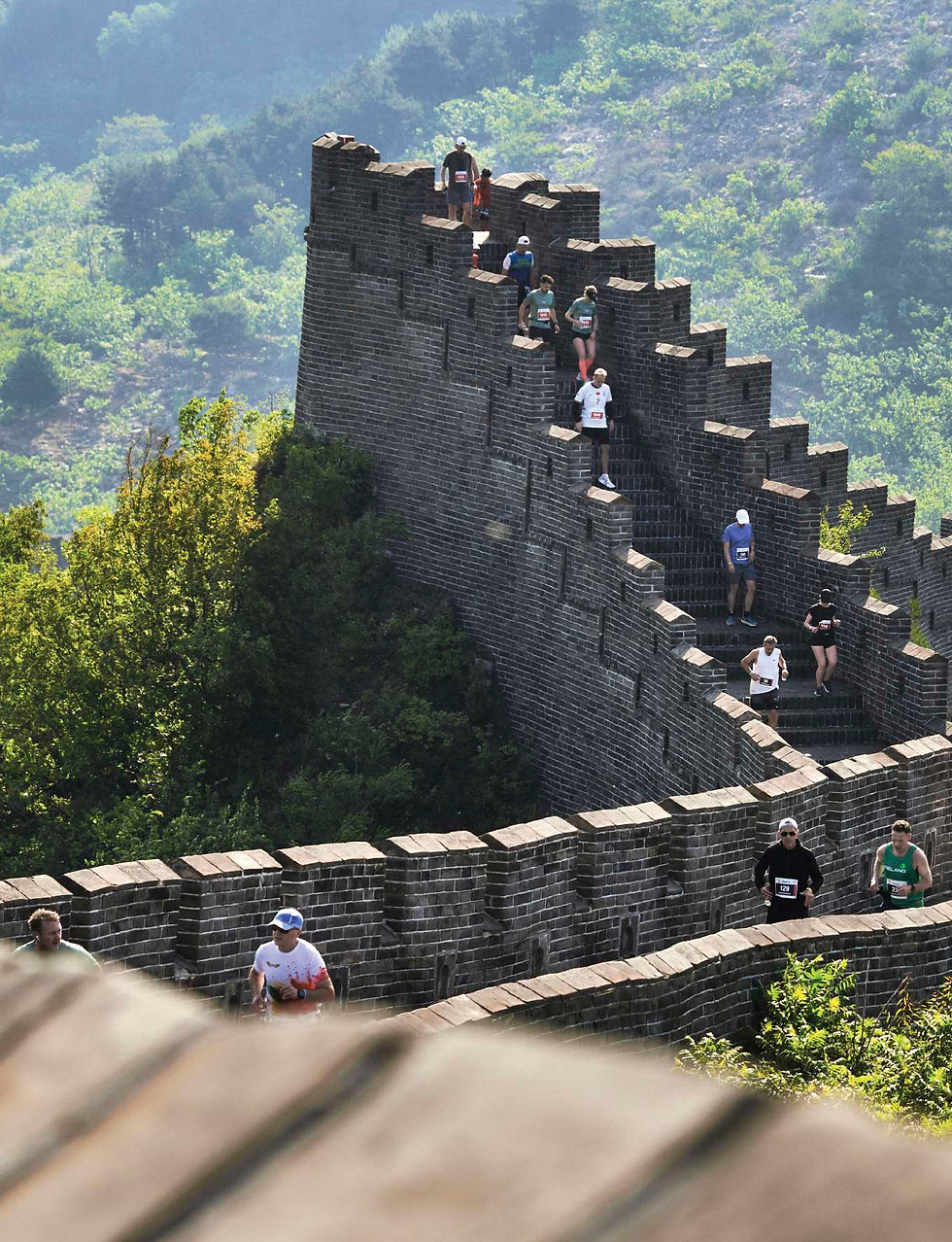
It was still dark when the bus dropped us at the base of the wall.
We had left Beijing just after 2am, the city quiet and emptied of its usual urgency. Now, in the mountains, the air was unexpectedly cold. Runners stood in small clusters, arms folded, shoulders hunched, waiting. No one had anticipated this kind of cold in May. We had packed for heat.
Above us, the Great Wall rose into the hills, climbing and disappearing into itself. The air was clean, and you could see its full outline stretching across the ridgelines. Clarity isn't always guaranteed; often the landscape is softened by haze, the horizon obscured. In a few hours, we would run across it.
TRAINING IN SUZHOU
At the time, I had been living and working in China for about a year. Running was something I did mostly on the edges of my life. In the mornings before work, I ran through the streets of the city while it was still waking up. Before leaving my apartment, I would check the Air Quality Index on my phone before checking the weather. On days when the numbers were too high, I shortened my runs or stayed indoors. Sometimes I would head out anyway, only to turn back early if the air felt heavy in my lungs.
When I returned to my apartment building, I would enter through the side stairwell and climb all 28 floors to the top. Then down again. Sometimes three repetitions. It was the only way I could think of preparing for a race I had been told involved thousands of steps.
Where I lived, in Suzhou, a city of 12 million people near Shanghai, there were no trails or hills. Just concrete and vertical space. In winter, temperatures dropped below freezing, and I learned to run in layers, my breath visible in the early morning air. In summer, the humidity was so thick it slowed everything, forcing a different kind of rhythm and greater patience.

STEPPING FORWARD
By the time the Great Wall Marathon started, the cold had begun to lift, but as the sun rose higher, the temperature shifted again, and the stones beneath our feet began to radiate heat. The steps came relentlessly – high steps, shallow steps, uneven steps worn by centuries of use – and there was no rhythm to them, no way to move without paying attention. Every stride demanded something from you.
Only about 6km of the race was actually on the wall itself, but those kilometres stretched in time. Running there felt less like racing and more like moving through history, each step placed on something ancient and indifferent to your effort.
Near the end of the race, with about 4km remaining, I found myself climbing another endless staircase beside a Chinese runner. We had been moving alongside each other for some time, sharing an understanding that comes from matching pace.
He gestured ahead. "First lady," he said. I followed his gaze and saw her, small in the distance.
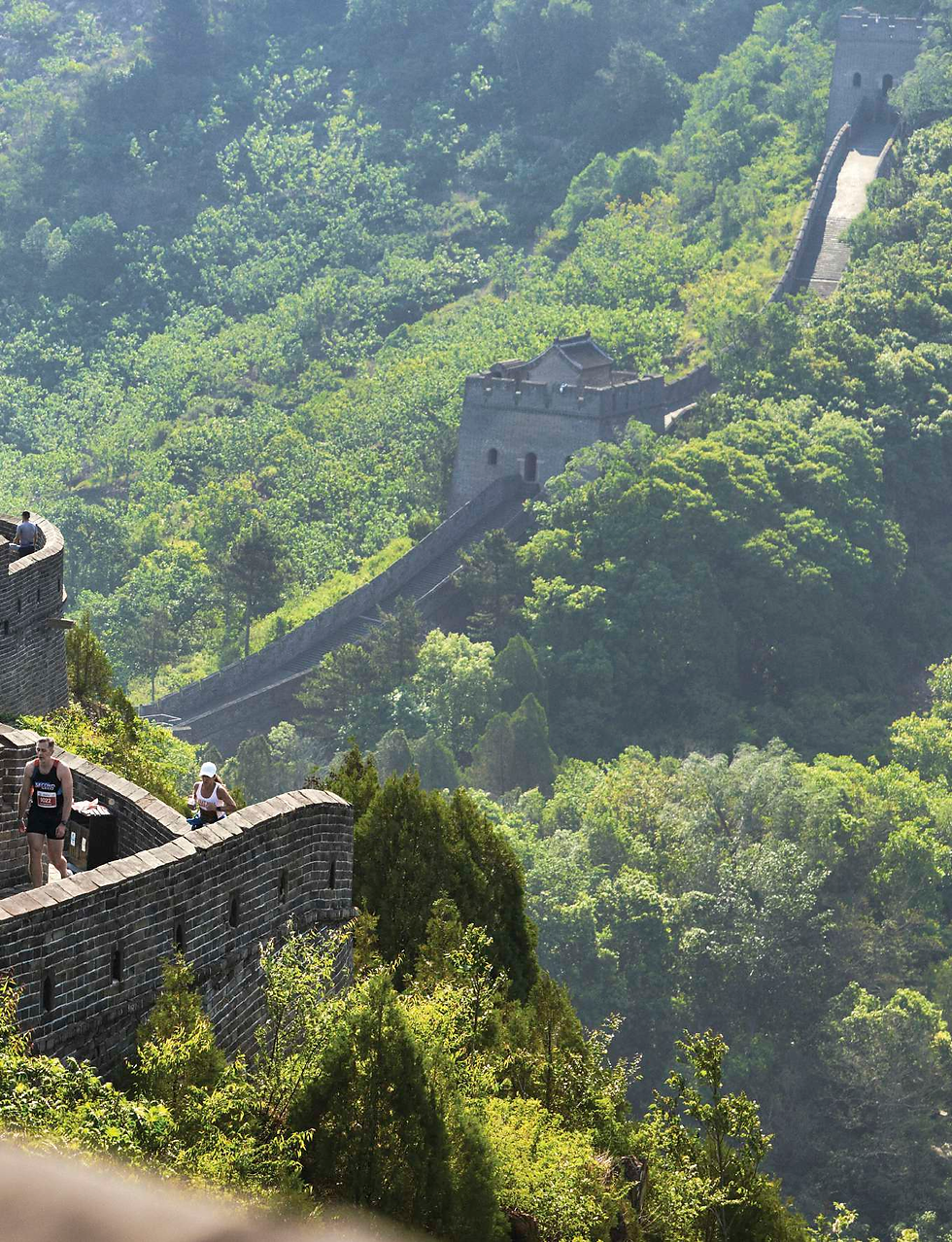
Until that moment, I hadn't been thinking about position. I had been absorbed entirely in the effort, in the physical act of moving forward over something so vast. But suddenly, the race shifted shape. I thanked him quickly and began descending the steps as fast as I could, legs burning, unsure if I would catch her.
I did, somewhere before the wall ended and the course returned to the roads. And when I crossed the finish line, what I felt wasn't triumph so much as disbelief. Running had always existed quietly in my life, something personal and contained. Yet somehow, it had carried me into a space I hadn't known I was capable of reaching.
FINDING MY TRIBE
There was a small running shop in Suzhou that I began visiting, owned by a man who spoke enough English for us to understand each other. At the time, most race registrations were only available on Chinese websites, impossible for me to navigate. He would enter on my behalf through his local club account, sometimes signing me up for distances I wasn't sure I could handle. He also advised me on equipment – what shoes to trust on technical terrain, when I would need poles, what to expect from distances I had never run before. Without him, many of those early races would have remained inaccessible, existing just beyond reach.
Not long afterwards, a Chinese friend introduced me to a woman with the English name Grace, who trained for trail races. She spoke very little English, and my Mandarin was limited, but she agreed to take me with her on one of her training days.
We met early and took a long train out of the city, eventually arriving at a small mountain. Even there, the trails were shared spaces. Hikers, families and tourists moved along the same narrow paths, and running required constant awareness – slowing, stepping aside, adjusting. It was different from the solitude I had known elsewhere.
The trail was steep and technical, winding sharply upward. She carried poles. I didn't. She handed me a pair and watched as I tried to use them, awkwardly stabbing the ground in front of me. She shook her head gently. "No," she said, smiling. She demonstrated the technique, showing me how to plant them behind me, how to use them to support upward movement rather than disrupt it.
We ran up the hill. At the top, instead of continuing forward, she turned around and ran down again. Then up. Then down. She repeated the same section, over and over and over. There was no variation. Just repetition. Focus. Discipline.
I remember being struck not only by her strength, but by her patience. She didn't explain her training philosophy. She showed it. And in doing so, she showed me what it meant to prepare for something beyond comfort.
At races, I began noticing the same small group of women appearing in the results again and again. Their names surfaced consistently across distances that still felt unimaginable to me – 50km, 100km, sometimes more. They weren't numerous, but their presence was consistent, and over time, they began to reshape my understanding of what was possible.


